
Majors & Courses
Academic Majors & Minors
Civic Leadership courses give students practice resolving questions through ethical reflection, economic analysis, and thoughtful statecraft. Important questions include: How should I live and lead? How do I resolve ethical questions? What factors produce economic dynamism, and how are they measured? Which economic and political system best promotes human flourishing? How do nations relate to one another? What are the possible courses of action when those relationships break down?
In a period of institutional uncertainty and civic fragmentation, we need a renaissance of classical liberal education that prepares citizens and future leaders for the responsibilities of self-government. The School of Civic Leadership responds to this crisis with a rigorous, integrated, and public-spirited program of study to support efforts at national renewal.
Civics Honors

The Bachelor of Arts with a major in Civics Honors introduces students to the intellectual inheritance of Western Civilization and to the American constitutional tradition. From the first intellectual foundations through a capstone thesis and internship, students gain experience that informs a life of service.
It is structured around the question, What do leaders need to know? and has three mutually supporting parts: Constitutionalism, Western Civilization, and Civic Leadership. Together, these provide a coherent education in the philosophical, historical, and institutional foundations of ordered liberty.
The Constitutionalism component offers sustained engagement with the ideas, debates, and structures of American constitutional government. Students read deeply in the political thought of the Founding, the Federalist and Anti-Federalist writings, the great crises of the Civil War and Reconstruction, and the major political speeches and Supreme Court decisions that have shaped our national tradition. Rather than treating the Constitution as a static document or merely a site of cultural conflict, students are introduced to it as a politico-philosophic achievement and as a framework for responsible self-government under law.
The Western Civilization component situates this achievement in its deeper civilizational context. Courses explore the moral and political thought of ancient Greece and Rome, the contributions of the Hebrew Bible and Christian theology, the intellectual ferment of the Renaissance and Reformation, and the challenges of modernity. Students engage thinkers such as Plato, Cicero, Augustine, Aquinas, Locke, Rousseau, Marx, and Tocqueville not as an antiquarian study but as interlocutors, reviving an older tradition of learning in which the great books form the core of one’s intellectual formation.
The Civic Leadership component integrates classical rhetoric, statesmanship, and public affairs with serious training in economics, data analysis, and markets in order to equip students with the needed tools for participating in a self-governing republic. Students learn to read both texts and trends to combine political judgment with empirical insight and deep literacy with robust numeracy. This area ensures that graduates are not only thoughtful, but effective: capable of leadership in public life, civil society, and the professions.
All students complete a thesis, an internship, foreign language sequence, and electives. The thesis spans two semesters, and it is the capstone of the Civics Honors experience.
Great Books (Honors)

The Bachelor of Arts in Great Books (Honors) revives the original purpose of a university education: to cultivate wisdom through sustained engagement with the foundational texts of the western tradition. At a time when academic disciplines have grown siloed and fragmented, the Great Books (Honors) major offers students a coherent course of study centered on the classics of philosophy, literature, theology, science, and political thought.
Students read works from Homer and the Presocratics to the greats of the twentieth century. They are introduced to multiple traditions—Greek, Roman, Jewish, Christian, Enlightenment, Romantic, and beyond—and encouraged to engage with each on its own terms. The major is structured neither as a relativist canon nor as an imposed orthodoxy, but as an inquiry into the internal debates which have animated the most spirited disputes within the life of the West—and which illuminate the encounter between East and West.
The major is interdisciplinary by design and integrative in spirit. Students may combine it with a second major or minor in any field, including government, history, philosophy, science, or business. The School of Civic Leadership works in close collaboration with other departments to ensure that Great Books students are fully engaged in the university’s intellectual life.
Strategy and Statecraft
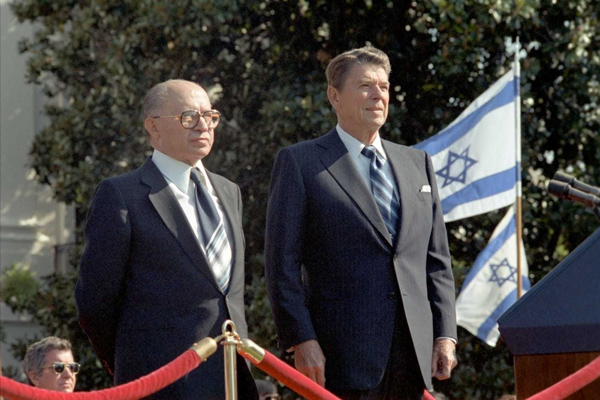
The Strategy and Statecraft Honors major, offered through the Clements Center for National Security in partnership with the School of Civic Leadership, offers students an intellectually serious education in the principles and practice of grand strategy. It combines rigorous engagement with the moral foundations of politics, war, and diplomacy with historical and contemporary case studies of statecraft in action.
Courses are organized into three broad categories: moral foundations, war and diplomacy, and strategic theory and practice. Students begin by studying texts that address the nature and limits of political action, works such as Thucydides’ Peloponnesian War, Machiavelli’s Discourses, and Shakespeare’s histories and tragedies. They grapple with questions about power and legitimacy, prudence and justice, tragedy and ambition. In so doing, they develop the capacity for moral and strategic judgment.
Next, students turn to the empirical study of war and diplomacy, from ancient battles and imperial expansion to modern conflicts and international institutions. These courses emphasize the interaction between political objectives and military means, as well as the tension between national interest and ethical restraint.
Finally, students study strategic theory and statecraft: how leaders align means and ends, balance domestic and foreign concerns, and make decisions under conditions of uncertainty and risk. Instructors draw from classics of strategy—Clausewitz, Sun Tzu, Liddell Hart—as well as contemporary case studies and simulations. The goal is to form leaders who can think synthetically and act prudently in the face of global complexity.
This major is ideal for students considering careers in foreign service, defense policy, national security, or diplomacy. It also serves as an ideal complement to ROTC participation.
Philosophy, Politics, and Economics (Academic Minor)

Philosophy, Politics, and Economics (PPE) began as an interdisciplinary degree program at Oxford in 1924, and, 100 years later, it has spread to well over a hundred universities around the world as either a major or minor area of study.
One way to see the interdisciplinary connection is to note that economics and philosophy provide the tools that help us explain, predict, and evaluate behavior under alternative political institutions.
Another focus of PPE is on the effects of political institutions on economics—on studying how markets work and how the division of labor that markets promote affects human welfare and intellectual progress. Political economists such as Hume, Smith, Marx, and Mill each recognized that market exchange typically operates in the context of a political system that determines what can be owned and traded, which contracts will be enforced, and which activities will be permitted or prohibited.
PPE students will encounter a collective action problem such as anthropogenic climate change or antibiotic resistance (both of which are global and intergenerational) and be able to use the tools of game theory to figure out whether it is best modeled as a prisoner’s dilemma, an assurance game (stag hunt), a game of chicken, or something else altogether. They will also be able to think through whether a particular set of actions is an equilibrium (or stable point) in the game, whether there are Pareto-superior outcomes, and whether we might be able to use social norms or legal sanctions to move to such an outcome at a sufficiently low cost. In other words, PPE helps us model problems that arise when we interact with one another and then evaluate the tradeoffs among the politically feasible and morally desirable set of solutions. Sometimes the solution is simply to allow people to communicate and share information; other times norms or laws are needed to solve the problem.
PPE students also study how economic tools such as game theory and utility theory can illuminate problems in political philosophy. Economists emphasize that in markets, people get what they pay for, but in politics, citizens get what other people vote for. This simple observation has significant consequences for how people gather and sift through information in the market and in the political realm. If voters tend to be “rationally ignorant” about politics because they have little chance of affecting the outcome of an election with their votes, this raises normative questions about the proper scope of democracy, the appropriate role of constitutions and courts, and the optimal rules for financing campaigns and crafting policy.
Civic Leadership (Academic Minor)
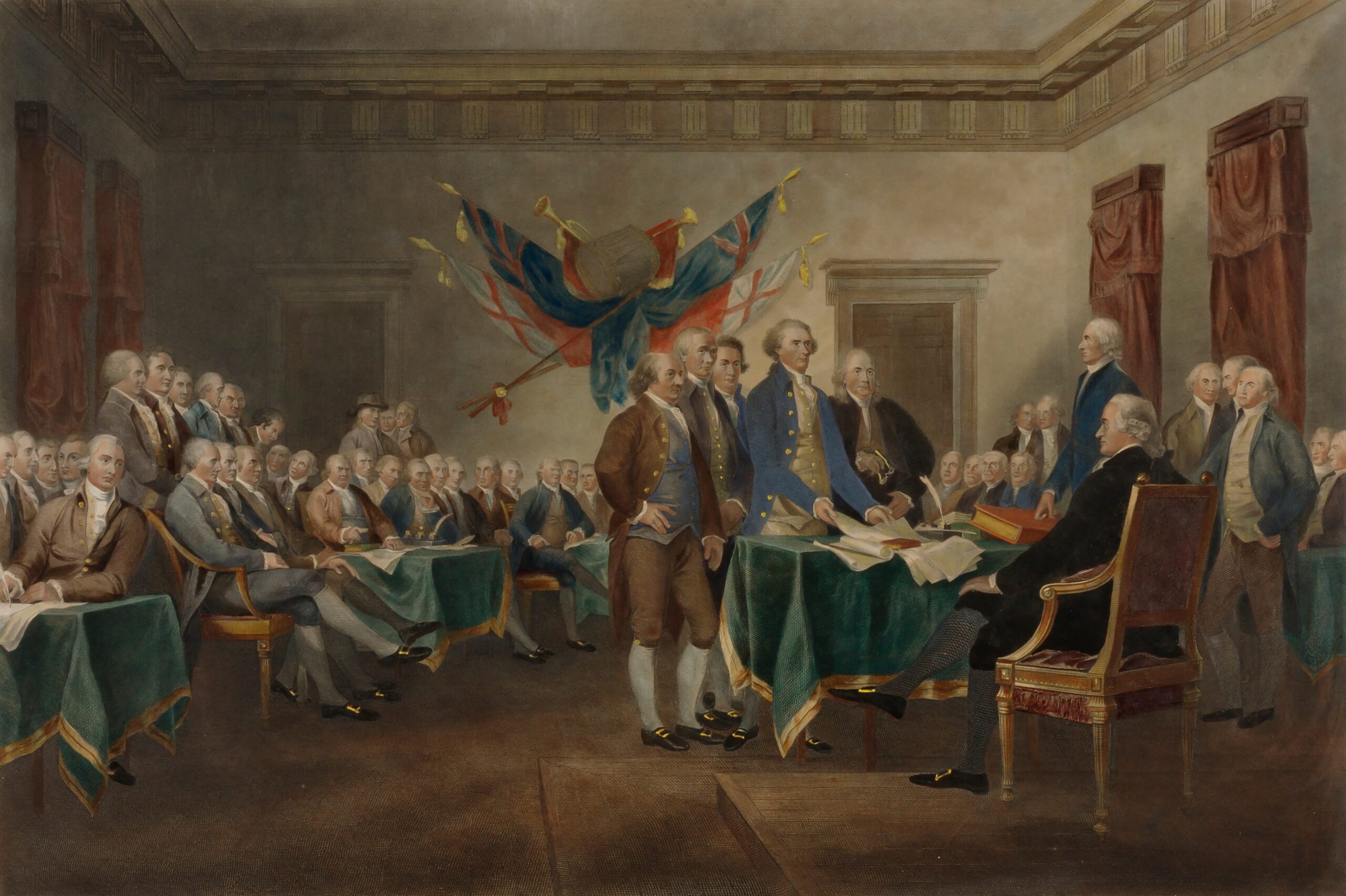
Open to students in any field of study, the minor in Civic Leadership equips students with the tools to live, lead and think carefully. The program draws on multiple disciplines, asking students to grapple with foundational questions raised across the Western intellectual tradition and America’s constitutional heritage.
At its core is a required course on the American constitutional tradition. Beyond that foundation, students deepen their study through four additional courses at the introductory or advanced level, selecting from courses in CIV, with offerings in Constitutionalism, Western Civilization, Civic Leadership, and select core courses.